

Hair transplant is a procedure chosen by both men and women. It is generally considered a long-lasting option for hair loss.
Key Takeaways
- FUE replaced FUT after 2005 and remains a widely used technique, leaving fewer scars and healing fast.
- Local anesthesia is applied under an anesthesiologist's supervision during the FUE procedure.
- Every method shares three core steps: collecting follicles, opening channels, and transplanting them.
- In FUE, follicles are harvested individually with 0.7-0.8 mm needles, causing much less donor-area damage.
- If the nape donor is insufficient, beard grafts can supplement transplantation in the mid-scalp regions.
A hair transplant operation can be defined as a microsurgical operation performed in a clinical setting. The reason for being called microsurgical operation is that a hair transplant is not performed like a normal operation, and a hair transplant is done with much less intervention.
Hair transplant operation is an effective and long-lasting solution for people who experience androgenetic alopecia, which is known as male pattern hair loss.
Moreover, those who suffer from various hair diseases, those with scars, and those who suffer from other types of hair loss can also benefit from a hair transplant.
Hair transplant operations, which have been applied all over the world since the 1950s, have also been performed in Turkey. Today, hair transplant is done with different methods.
FUE Hair Transplant Technique
The approach closest to today's hair transplant began in the 1990s. Hair transplant operations, which were first made with the FUT technique, were replaced by the FUE technique after 2005.
Since then, the basic principles of the FUE hair transplant technique, which has developed within itself, continue to be maintained exactly and applied. Today, it continues to be widely applied.
With the FUE technique or method, people who experience hair loss can aim for a natural appearance.
The difference of the FUE method, which is the most commonly used technique in hair transplant operations, is that it leaves fewer scars and heals fast. There are some variants of this FUE method. It can be listed as follows:
- Micromotor FUE
- Robotic FUE
- Sapphire FUE
- DHI hair transplant
Although the purpose and result are the same in all the methods, the differences between the FUE methods arise from the application and the materials used.
For example, sapphire tips have been developed in recent years.
The reason for this is that the sapphire tips are a much smoother material. Opened channels heal much faster and fewer scars remain.
Hair Transplant With FUE Under Local Anesthesia
Local anesthesia is applied under the supervision of our anesthesiologists during FUE hair transplants. It offers you the opportunity to have a much more comfortable hair transplant experience.
Hair transplant procedures are performed under local anesthesia, and the FUE method aims to keep discomfort to a minimum for our patients who have fear of needles.
What Does Sedation Mean?
Sedation is a type of asleep state. With sedative drugs that can be adjusted especially for each person and scaled accordingly, the depth is adjusted in a controlled manner while all reflexes of the person are preserved.
Is Sedation Compulsory?
It is not compulsory.
We can perform our hair transplant procedures without sedation for our patients who want. We leave the preference completely to our patients.
What are The Main Steps in Hair Transplant?
Regardless of the method of hair transplant operations, there are basic principles. We can list them as follows:
- Collection of hair follicles
- Opening the channels
- Transplanting hair follicles
Collection of Hair Roots
Collecting the hair follicles is the first phase of a hair transplant operation. This is the characteristic feature of the method.
In the FUT method, a piece of skin was taken from the back of the head, and hair follicles were collected from this piece by being sliced.
However, in the FUE method, the hair is collected one by one using cylindrical needles. In this way, much less damage occurs in the area where the hair follicle is harvested.
In the FUE method, 0.7 mm to 0.8 mm sized needles are used to collect the hair follicles according to the size of the roots. The needles are sharp and single use for each patient. In this way, hair follicles can be removed according to their angles. The aim is to avoid damaging the roots.
For example, when trying to remove the hair follicle of a person with curly hair, the appropriate needle is used. Hair follicles can be collected without damaging their curly shape. All these details are planned by the doctor before the operation according to the condition of the patient.
Opening Channels
While opening the channels, steel slits are used in the classical FUE method. With these slits, an incision is made according to the natural direction of the hair. In this way, the transplanted hair is placed to grow in its natural direction. The direction of the hair is adjusted when opening the channel.
However, the angle of the hair relative to the skin is a factor to be taken into consideration during the implanting phase. In the FUE method, the steel slits used to open the channels are replaced after several hundred channels are opened. In this way, the sharpness of the metal slits is maintained.
Our clinic uses sapphire tips, which are smooth and sharp. Tips of different sizes are chosen for each patient according to the thickness of the hair follicles.
Transplanting Hair Roots
The final stage of hair transplant is the transplant of the hair follicles. In this process, the hair follicles are placed one by one at an angle of 40-45 degrees into the channels opened in the right direction.
All three stages have their craftsmanship. Of course, the most important craftsmanship is experience. In our clinic, the FUE technique is performed without stitches and aims for minimal visible scarring.
Things to Know About Hair Transplant Operations
It is useful to state some basic information about hair transplant operation or hair transplant. All individuals with sufficient hair follicles in the donor area and who do not have health problems can be assessed for a hair transplant operation.
The person who will receive the operation must spare three days before the operation and three days after the operation. If they work, it is advantageous to ask for permission. Although the duration of the operation varies according to the amount of hair root, an average session of hair transplant operation takes about 6-8 hours.
It will be advantageous to undergo an operation in a fully equipped hospital so that it can be intervened in case of possible complications.
A team of four people including at least one doctor and three medical personnel are required to take part in the operation. The full result appears gradually over many months, and transplanted hair can continue to mature for more than a year.
Hair Transplant Operation Process
We can specify the process of hair transplant operation in 7 titles:
- Consultation period: The operation plan and hairline are determined by your doctor.
- Preparation: It includes sterilization of the operation site and local anesthesia on the patient's operation day.
- Hair root collection: It is the process of collecting from the person's donor area.
- Channel opening: Channels are opened by the natural hair appearance in the area where the hair will be planted.
- Implanting: It is the implanting of the hair follicles at appropriate angles into the area to be transplanted.
- After the hair transplant operation: removal of the dressing in the recipient area, a new dressing, and PRP treatment to support healing.
- Hair washing: daily washing starts on the day your doctor gives you in writing and continues for the period your doctor specifies, considering the sensitivity of the recipient area. It helps the scabs shed and supports healing.
Laser-Assisted Hair Transplant
The application called low-level laser or cold laser is combined with the operation in laser-assisted hair transplant application. The purpose of using the laser after the operation is to accelerate the healing of the scars in the post-operative area and to help reduce side effects such as redness, swelling, and pain.
The aim is to support a faster recovery. Since heat is not generated in the laser-assisted system, it aims to reduce side effects in the treatment area.
We do our treatments with a low-density laser device in hair loss treatments in our clinic. If our devices are applied on the scalp twice a week with twenty minutes of sessions, it aims to reduce hair fall first. With longer use, it aims to support hair thickness.
When a certain improvement is reached, it is aimed to continue the improvement by reducing it to a session once a week. Previous scientific studies have reported a therapeutic effect on both male and female genetic hair loss.
It is a medical application and its mechanism of action increases metabolic activities in the cell and increases ATP (adenosine triphosphate) and nitric oxide levels. This is thought to strengthen the hair.
In laser-assisted treatments, the laser beam is sent to the scalp with therapeutic low energies. The nourishing laser lights stimulate the hair follicles, which are the root structure of the hair. The aim is to reduce thinning and support the natural growth cycle.
Low-level laser therapy has been studied in hair loss. The devices we use can be adjusted to the patient's situation.
Advantages of the FUE Method
FUE method, which is one of the most used methods all over the world, has many advantages. It can be listed as follows:
- The FUE method can be used for many types of hair loss. Those with mild hair loss or those with advanced hair loss can also receive treatment with the FUE method.
- Hair can be transplanted with a natural-looking direction and density.
- The patient's comfort is also considered in this method. Procedures aim to keep pain to a minimum and to limit scars and marks after surgery. All this makes it a comfortable method.
- Patients can recover quickly after having a hair transplant with the FUE method. They can easily return to their everyday lives. They can travel once their doctor approves it.
- If the operation is planned correctly, damage to the donor area is kept to a minimum.
Factors Affecting Success in FUE Method
The FUE method can be applied to many patients. However, some factors affect the success of the operation. We can list them with our experience and knowledge as follows:
Experience: The experience of both doctors and hospitals in the FUE method and other hair transplant methods have a great role in their success rates. As we mentioned at the beginning, managing the pre-operation, operative, and post-operative process requires experience. We serve our patients from all over the world and from across Turkey.
Expertise: Although hair transplant is a microsurgical procedure, expertise is also required in this area. The operations should be carried out by a physician who specialized in this field and has improved themselves. Moreover, just the expertise of the doctor is not sufficient.
Each operation requires at least three assistants. They should work in a team spirit, be able to perform the necessary examinations, and apply the treatments by making accurate diagnoses. Doctors are responsible not only for the results of hair transplants but also for the health of the person. This requires knowledge and dedication in all aspects.
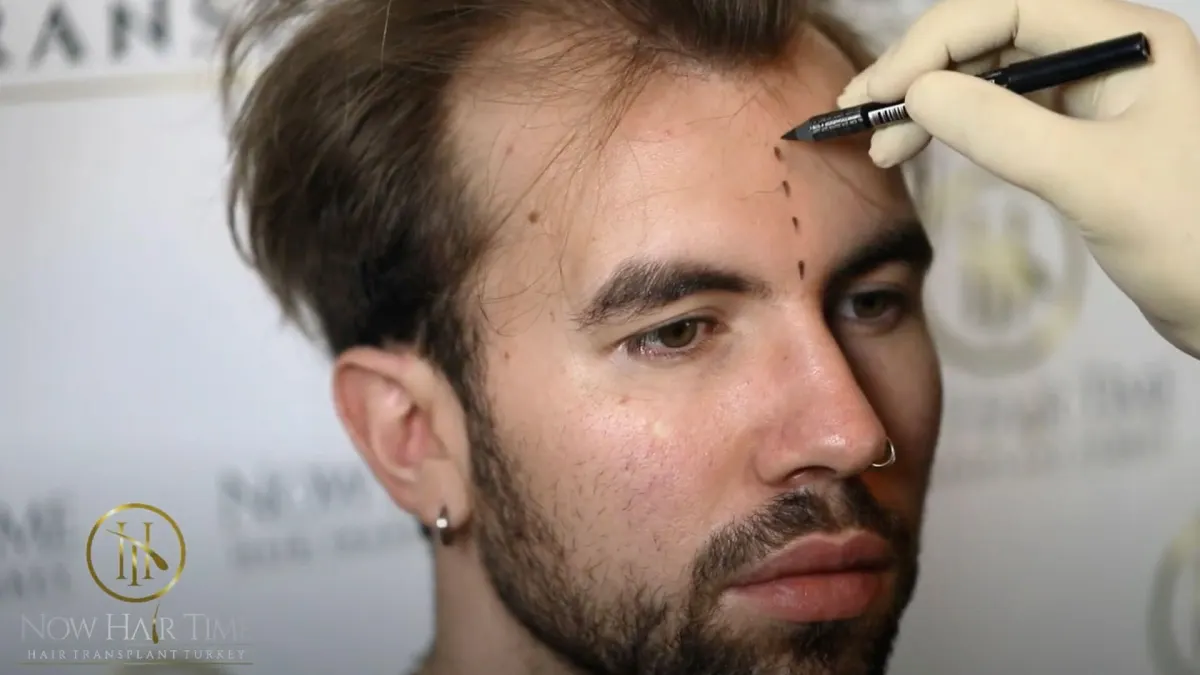
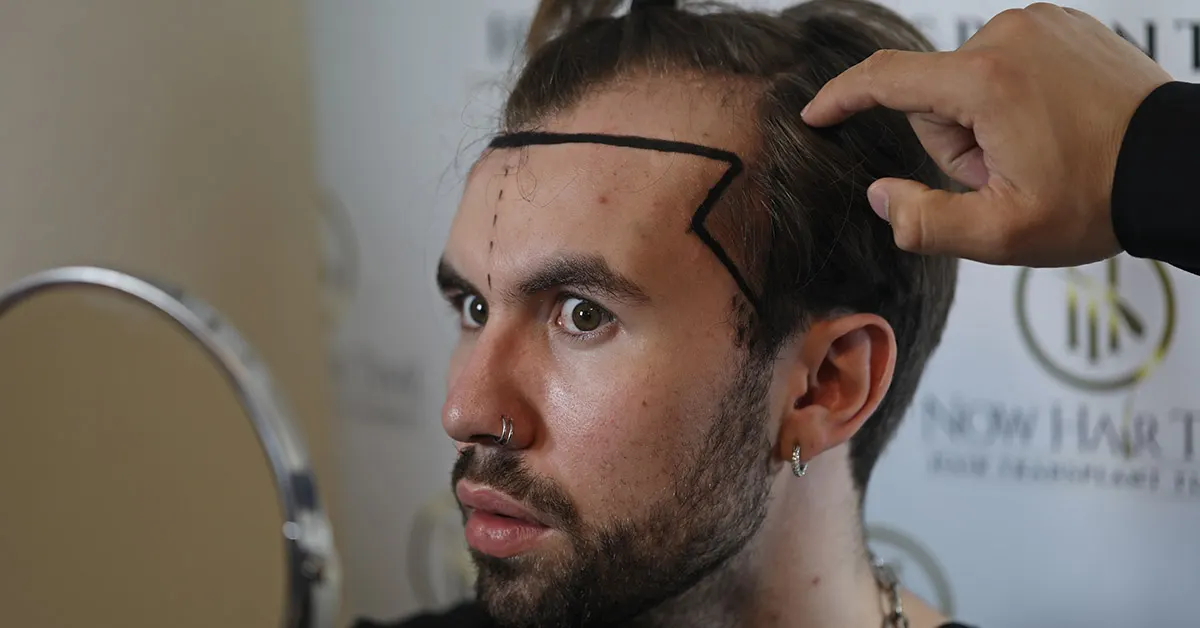
Hairline: Hair transplant serves directly the purpose of aesthetics, unlike many other areas of medicine. Aesthetic concerns are more prominent in the application and operation. Therefore, the front hairline should be adjusted according to the face shape of the person and designed by the head structure. Being able to do these requires an artistic and aesthetic perspective.
Empathy: The starting point in hair transplant operations is examinations. Therefore, the needs of the patient should be analyzed correctly first. It is important to understand the patient to make the right planning. In our clinic, these principles are always taken into consideration, and planning is carried out accordingly.
Factors Increasing Success in a Hair Transplant Operation
For those who need hair transplants, the current conditions may not always meet the need. For example, the person may not have enough hair follicles in the nape area, which is accepted as the main donor area.
This will naturally decrease the chances of success of the hair transplant operation. At this point, hair roots that can be obtained from other parts of the body can be used for a more successful hair transplant operation.
Hair Transplant by Harvesting Grafts from Beard
Harvesting hair follicles from the beard is an alternative donor source in a hair transplant. If the person's nape area is insufficient as a donor site and the area to be transplanted is too large, the beard area can be preferred as a donor area. Beard roots, which can be in the growth phase for a long time, can be suitable as donors.
However, beard hair is thicker than scalp hair. For this reason, the hairs taken from the beard area are used in the middle regions to increase density, not in the front line during implanting.
Hair Transplant by Harvesting Grafts from Body Hair
In hair transplant operations, body hair in men is considered the third option. In case the hair follicles taken from the nape and beard are insufficient, chest hair alternatively is preferred. However, chest hair is not as durable as hair follicles from beard and nape and its elongation feature is low. For this reason, we do not prefer chest hair to achieve an effective result.
Written by the Now Hair Time editorial team